Wendy

THE SOVEREIGN HEART OF CHINESE MEDICINE ☯

www.ElementalChanges.com

While the brain can help us to understand, it can also separate us from the essence of true knowing. Some of the issues of academic teaching, as well as the orientation we encounter in many of our patients, is that the brain wants to rule. The brain has its place but it is absolutely subservient to the unifying function of the Heart, which is like an aperture that allows us a state of resonance, rapport and connection with everything else.


The Heart is all-healing and creates unity and connection; while brain, the servant, can vie to become the master, denying there is anything outside of itself with its causal, scientific, analytical process of creating distinctions. Establishing a healthy heart field in one’s self is important. The capacity for synchronization is a fundamental truth and cultivating coherence of our heart field allows a channel to enfold a person who is ill to the inner cultivation of truth.


All sentient beings basically synchronize to the energy fields of their environment. Electromagnetic fields encompass a huge amount of ‘information’ about each organism, and once synchronized, there is a rapid flow of information exchanged. In synchronizing, a patient harmonized with their practitioner’s healthy Essence and Heart patterns, finds support to solve their health conditions and facilitate change and hope on their life path.


   ☯

Posted by Wendy in analytical

Wind 風

✍️Wendy Brown, Lic. Ac.

According to the Lingshu, a classical text in Chinese medicine known as the Celestial Pivot, the adverse influence of wind was considered so great that the sages ‘avoided the winds like avoiding arrows and stones.’ Like the sages mentioned in the Lingshu, we are all cautioned to avoid even subtle exposure to wind. The wind is considered a ‘pernicious influence’ in Chinese medicine. In ancient times, distinctions in wind were made relative to the bagua directions of the I Ching; each of which yields a certain pathological influence.www.ElementalChanges.com Wind

Adaptation from prose of Song Yü, 4th Century BCE  

A gust of wind blows in. How pleasant a thing is this wind which is shared by all people. Wind is a Spirit of Heaven and Earth. It does not choose between noble and base, nor between high and low. Wind-Spirit comes to different things but wind is not all the same.

It follows the rolling flanks of mountains and dances beneath the pine trees and cypresses. In gusty bouts it whirls. It rushes in fiery anger. It rumbles low with a noise like thunder, tearing down rocks and trees, smiting forests and grasses. Once at last abating, it spreads abroad, seeking empty places and crossing the thresholds of rooms. Growing gentler and clearer, it changes and is dispersed and dies. Freeing itself, wind falls and rises. It bends the flowers and leaves with its breath. It wanders among the osmanthus and pepper-trees. It lingers over the fretted face of the pond to steal the soul of the hibiscus. It touches the willow leaves and scatters the fragrant herbs. Then it pauses in the courtyard and turning to the North goes up to the Jade Hall, shaking the hanging curtains and lightly passing into interior rooms. Wind is fresh and sweet to breathe, and its gentle murmuring cures the diseases of men, blows away the stupor of wine, sharpens sight and hearing, and refreshes the body.

There is also wind that is ill-wind; wind which rises from narrow lanes and streets, carrying clouds of dust. Rushing to empty spaces it attacks the gateway, scatters the dust-heap, sends the cinders flying, pokes among foul and rotting things, till at last it enters the tiled windows and reaches the rooms of a cottage. Now this wind is heavy and turgid, oppressing a wo/man’s heart. It brings fever to the body, ulcers to lips and dimness to eyes. It shakes one with coughing and weakens a person before their time.


Posted by Wendy in analytical

Inner Alchemy

Xing Ming Gui Zhi 性命圭旨 [1615], Taoist texts bearing theory on innate nature and the preservation of life force through inner alchemy. “Physical form and Spirit are together marvelous disciples of the Way; Innate disposition and lifespan are mutually perfected.”

Thesis by Daniel Burton-Rose, 1998

www.ElementalChanges.com Xingming Guizhi

http://www.charleschace.com/pdfs/Xing_Ming_Gui_Zhi-BurtonRose.pdf

Posted by Wendy in analytical
Welcome Spring!

Welcome Spring!

✍️ Wendy Brown, Lic. Ac.

In Chinese medicine we are taught from the perspective of cosmological wholeness. Humans are understood to be integral aspects of nature, embodiments of the same life force and flow as everything else in the natural order of the universe. From this holistic perspective, the wisdom of Chinese medicine advises that people undertake behaviors befitting the progression of the seasons since the influences occurring in nature have inextricable influence on human physiology. Springtime is the the season that nourishes and renews life from the contracted state of winter’s introspection and containment. It is the season of beauty and harmony; a time to roam through gardens and forests, leisurely sitting and absorbing tranquil sights, sounds, and fragrances. It is against the dynamics of nature in this time of bursting forth to dwell upon things or become morose. Spring is a time to be rid of stagnant energy. The energy that encourages budding and regeneration is experienced by all of the natural world.

Heaven and Earth are enlivened and the ten thousand things may now begin to grow luxuriantly

Renewed warmth of the sun’s rays kindles growth and the wind stirs motion. This stirring, upward energy can have influence on disease conditions that have lurked beneath the surface, activating their expression with the heightened dynamics of the wood element. In early spring [from February to April, according to the Chinese calendar] weather is erratic; cold wind at one moment then hot sun the next, and since most people suffer some form of chronic imbalance, this advancing and shifting of influences may also cause people to feel tired and weak. Chronic ailments flare easily under these conditions and therefore we should encourage suppleness of the Liver.

Artwork by Liu Yunfang, Shandong Province.

Artwork by Liu Yunfang, Shandong Province

Gao Lian, Ming dynasty medical scholar and poet, elaborated upon the season of spring as discussed in the Huang Di Neijing Su Wen, the doctrinal source of Chinese medicine for more than two millennia.

Spring is the time to discharge the stale energy of winter’s storage and confinement. In spring one should behave in such a way that new life is nourished so that growth can occur in summer.

Get up early. Walk. Let your hair down. Garden. Do T’ai chi. Relax and make your body supple.

Reward, fortify and promote all life. Do not kill, deprive, or punish, as these contrary actions damage the Liver.

Seek to give, not take. Be agreeable and have a benevolent bearing.

Eat less sour food in order to prevent excess in the Liver, and eat more mildly sweet food to shore the Spleen which is suppressed by excess the wood element.

Avoid drinking alcohol, coffee, and food and drink that agitate the harmony of Liver Qi.

Show restraint in eating the commonly eaten foods that have a tendency to harm the integrity of the Spleen and Stomach.

Do not simply use herbs to overcome stagnation. If there is no sign of disease the need to take medicines is lessened. [Converse to the advice to nourish with foods and tonifying medicinals in the previous two Yin seasons of winter and autumn].

There was moonlight, the trees were blossoming, and a faint wind softened the air of night, for it was spring.   

~Li Bai, from ‘Clearing at Dawn’

Humans depend on Qi between Heaven and Earth for existence, and on the law of the seasons. Life destiny lies in balance.

Tranquil and highly efficient culinary and lifestyle arts are expressions from China’s antiquity. China has long-understood the ways in which the heart of human life unifies with nature – and in early spring it is all about peach the blossom! Here are 3 delicacies from the peach blossom: 1. Petals dried on hot rocks and infused into tea. 2. Dessert (milk from Liziqi’s flock, lotus root starch, rock sugar). 3. Peach blossom infused honey.

WELCOME SPRING!


Posted by Wendy in analytical

Researching Two Forms of Moxibustion: Punk and Smokeless

 灸


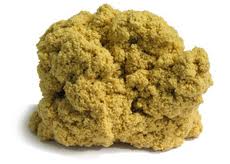
Moxa ‘punk’ is loose herb form of mugwort for direct and indirect moxibustion treatment. Applying the method of smokeless moxa, densely-packed moxa made by a charcoal process which results in little or no smoke, was compared in its effect to that of moxa punk. Heat by each form of moxa was transferred to the end of an acupuncture needle during warming needling moxibustion.


• Moxa was lighted on the handle of filiform needles [40mm x 0.3mm -as well as- 40mm x 0.25mm] and subsequent temperature was measured at the needle tip.


• The significant findings were that moxa punk produced a 41% greater and more rapid temperature increase than the smokeless moxa cones. Conversely, smokeless moxa cones maintained maximum temperature four times longer than moxa punk did.


• Findings suggested that the temperature characteristics of moxa punk during warming needle correlate with a capacity as a dispersing treatment method, while smokeless moxa correlates to a method more of tonification in Chinese medicine.

Smokeless Moxa

Smokeless Moxa

Moxa Punk

Research Dissertation by Steve McCulloch

http://www.focusacupuncture.co.uk/uploads/1/6/7/1/16711880/___warm_needle_experiment_dissertation_final.pdf


Posted by Wendy in analytical

TREATMENT OF CHILDREN BY ORIENTAL MEDICINE

Increasingly, children are growing up here in the West with acupuncture and Chinese herbal medicine as a routine part of promoting health and treating the onslaught of childhood health complaints. Children, like adults, suffer from imbalances of QI which are vital to get to the root of. However, our young friends are not mini-adults; their energy is delicate and formative. What happens with them in the capacity of their care and habits that are formed is greatly determined by factors beyond their control.


Confucius presenting the Guatama Buddha baby to Lao t'zu.

Confucius presenting the Guatama Buddha baby to Lao t’zu.

By helping to educate parents on care for children in the wisdom of oriental medicine, and relying on these treatment methods, prevents imbalances and pathogenic factors from settling in that further weaken, pattern, and chart a course for the child’s future health. Various childhood infectious diseases, as well as problems with diet, food cravings, sleep, and emotions commonly effect children and can be well-addressed through the practices and support of oriental medicine. Good health and well-being of a child is likely to increase happiness of the family.

Posted by Wendy in analytical

The 250 Year Old Man


When Lǐ Qīngyún 李清雲 was 105 years old, he traveled to Pingliang County in Gansu province of Tibet to collect herbs. In the Kunlung mountains Li met a hermit who was much older than he. Li asked the elder for the secret of long life, and the old hermit laughed, saying, “Why are you asking me? Aren’t you doing quite well on your own?”

“Ren Shen參, Zhu Ling猪苓, Ling Zhi靈芝, and the orchid are herbs of longevity,” the hermit said. “The mountains, forests, and the wilderness are all places of quietude. Nature is the secret of longevity, and you have all of this, so why are you asking me?” But, Li was persistent, even begging the elder. The old hermit spoke of some breathing [Qigong] and a word of dietary advice to follow.

After his encounter with the elder, Li recruited three Taoist adepts to go to Emei Mountain, a famous Taoist mountain in Sichuan province, to live in practice of these ways. There, Li built a hut and taught the methods to the others. According to Li, within a few years he was able to abstain from grains [bìgǔ 辟谷], learning to lighten the body.

Exercises practiced every day, regularly, correctly, and with sincerity, Li was able to achieve the power of Bìgǔ, attested to by the brightness of his eyes and the sharpness of his senses. He was full of energy, exceeding his former self. At that time he was already 140 years old, but the people who met him said he looked like he was in his 40s.

Li remained at Mei Mountain for about 100 years. The number of his followers grew to around 100; all baby-faced, white-haired elders, each over 100 years old. After the Manchu Dynasty ended and the Republic was born, Li decided that he was quite old now and decided to move to the Chen Compound in Kaixian 开縣.

What annoyed Mr. Li was that living in the town was just too noisy and there were too many social functions. Some people there challenged him, openly telling him that they did not believe him to be 250 years old. He showed no sign of anger, but his answer on one occasion revealed his displeasure. “Why should I tell a lie?”, he would say. “It’s up to you whether you believe it or not. If you believe I have lived 250 years, it doesn’t benefit me. If you don’t believe, it doesn’t hurt me. But I have to tell you, during my life I have never lied and I have never cheated.”

AvoidingGrains

Posted by Wendy in analytical

Food Guidance in TCM

A constant and regular life-style; Suitable amounts of work and rest.

FLAVORS OF THE 5 ELEMENTS

BITTER Adjusts Fire [HT-SI]  Preparation by raw, pressed, blanching.

SWEET Adjusts Earth [ST-SP]  Preparation by steaming, low heat cooking for a long time, boiling.

PUNGENT Adjusts Metal [LU-LI]  Sauteéing then covered simmering, and pressure cooking.

SALTY Adjusts Water [KI-BL]  Preparation by stewing, frying, crockery cooking.

SOUR Adjusts Wood [LV-GB] Preparation by steaming, pressing, pickling.


COOKING METHODS

STIR-FRYING Yang energy increases in food that is prepared by stir-frying, particularly over flame. Since stir-frying infuses food with Yang energy, it is a method to expand Yang QI in one who is Yang deficient, as well as for many overall, during the winter months.

STEAMING & BLANCHING A moistening, purifying and ultimately yin cooking technique. Foods that have been steamed or blanched become infused with condensation and accent the fluid added by this cooking process. When steamed food is ingested it engenders heat cooling and yin preserving to the body.

BAKING Creates a reservoir of heat which is absorbed by the food and imparted in the digestive process.

STEWING Adds Yin nourishing, warm energy to foods and greater digestive nourishment.

PRESSURE COOKING Holds energy in food.

BOILING Releases heat and essence of foods.

SAUTEEING Long-cooking that softens foods and stores inherent QI.

BRAISING Retains moistening quality of food.

SOAKING Adds digestibility to seeds, grains, nuts and beans.

ROASTING & TOASTING Increases bitter flavor in foods.

SEASONS

IN SPRING Eat more sweet and less sour food to prevent excess in the Liver. Fresh, wild greens, lightly fermented food, grains
Light cooking style steaming, cooking for a short time

IN SUMMER Lighter quality and some raw foods
Large-leaved greens, summer squashes, sweet corn, fruit
Light cooking style: steaming and quick cooking
Lighter grains, such as white, long-grain rice, barley

IN AUTUMN Food of a more concentrated quality.
Root vegetables, winter squashes, beans.
Grains such as sweet rice, mochi and millet.

IN WINTER Food of a stronger, concentrated quality
Added root vegetables, miso, tamari, sesame oil, and some salt.
Heavier grains such as sweet rice, buckwheat, and oats.


A constant and regular life-style;

Suitable amounts of work and rest.


Posted by Wendy in analytical

Moderate Daily Exercise

Rest and exercise should compliment one another. Rest with little physical exertion tends to be harmful to the body; long-term sitting being harmful to the muscles, and lying down for extended periods harms the Qi. It can be concluded that even with good diet and rest, but without physical exercise, the entire system is burdened.

Harmony is the essential characteristic of the Chinese philosophy of health. Everything from Heaven and Earth, to the seasons, to the five elements, to the human body, must remain harmonious with the Tao [Universal Qi] in order to maintain its existence. To preserve vital Qi we must learn to flow with the Tao and seek harmony and balance. In this way, moderation is key.

Choose suitable, individualized, daily physical exercise to reduce stress and the hazards of disease. It should be noted that lifting and bearing beyond one’s true strength harms to the body. Qi Gong, T’ai Chi, and yoga are excellent practices to promote healthy organ functioning, nervous system, and circulation among plentiful other benefits.

Posted by Wendy in analytical

THE FIVE ELEMENTS IN LIVING FORM ☯

elementalchanges.com five elements living form

Nurturing core elemental tendencies while simultaneously balancing states of excess through a combination of diet, Chinese herbs and acupuncture and other mind-body techniques, we maintain innate elemental tendencies; transforming what may be hindrances into assets.

FIRE TYPES ☯ Are jovial pleasure-seekers. They like to relax, socialize and have fun. They often seek thrills and excitement, and love to entertain others. They are fascinated by sensory stimuli and often get carried away by the carnival of light, sound and image that the world presents. They often dislike school because it is not fun and the dislike grows as they get older and the workload intensifies. They try to make things more amusing by becoming the class entertainer.


EARTH TYPES ☯ Are all about the social world. They view their worth in terms of interpersonal relationships and they seek social contact. They want to fit in, and often play the role of peacemaker. These are the constant-talkers who get in trouble because they can not contain the need to connect with others. Quiet study periods are torture to them. Social matters are foremost in their minds, and they fret incessantly about who’s talking to whom and who will sit with them at lunch, all seeming far more important than their lessons.

METAL TYPES ☯ Are highly sensitive and detail-oriented. They see things few others do, and have an innate sense of order, beauty and perfection. They seek control and like to see their visions met. They value precision; where a Wood or Fire type might gloss over details, a metal type digs in. The Rigidity, inflexibility and getting stuck in their own sense of right and wrong, leaving no room for others, are a downside. They have difficulty letting go of small details, become anxious when something is not done ‘right,’ and they become negative when they feel out of control.

WATER TYPES ☯ Think and feel very deeply. They live in the realm of ideas and imagination and have only a modicum of interest in the physical, practical world. They are natural wisdom-seekers, and have a rather advanced interior world for their age. They often seem to be ‘off somewhere’, not particularly concerned with punctuality, and respond to time-pressures and other external demands by disconnecting, staring out the window, or retreating to their inner world. [Unlike Wood types who become confrontational, or Fire types who seek thrills, Water element types become withdrawn in chronic stress situations.]

WOOD TYPES ☯ Are very physical, competitive and want to be first. Natural leaders; they always want to win, to be in front. Pioneers who see a path and want to take it. They usually win the enthusiasm of peers. Since they live primarily in the physical world, they often act out physically when stressed, becoming aggressive, argumentative, ‘In your face.’ Under duress, they become the restless and assertive ‘Wild Child.’

* Dr. Stephen Cowan, who studied with Efrem Korngold, co-author of the modern TCM classic, Between Heaven and Earth, has spent 20 years affirming the distinctions of the Five Elements. He has amassed a vast library of work with thousands [of children] across the developmental spectrum, and believes the elemental tendencies begin to show themselves within the first year or two of life.

Posted by Wendy in analytical