Wendy

Chinese Tea


Lù Yǔ 陸羽

Tea has been enjoyed for millennia as a central aspect of culture, daily life, and health. China’s Yunnan province has pride in its lineage of tea plants, where the first tea plant survived the ice age. Cultivation of ceremonious tea drinking developed significantly in the Tang dynasty when Lù Yǔ 陸羽 composed the Cha Jing 茶經, early definitive compilation which advised the ceremonious consumption of fresh green tea using mainly the spring tips of Camellia sinensis tea leaves.

With its bitter sweet flavor, tea influences the heart and in so doing, expresses the heart’s  ability to stimulate the clear mind. As an instrument to open the heart, stimulating but calming at the same time, perception shifts and one absorbs the specific energy and minerals of the earth from where the tea grew, offering a meditative sense and poetic sight.
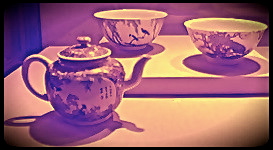
Fermenting enzymes of tea benefit digestion, wash the intestines and detoxify fats and cholesterol. Green teas are energetically cold and are best in summertime and for people with warmer constitutions, or balanced with warmer herbs. Darker, aged teas [Pu’erh and red teas] are fermenting. Like a living organism, they add to a person’s QI and are better for people with colder stomach QI. When tea is harvested, whether fermented, or not, or not processes at all, etc. determines the type of tea, its essence and its attributes. This revered plant, draws from the essence of the earth and imbues a heavenly sense that is revered by the countless many.
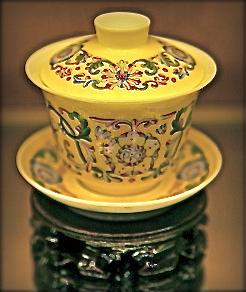
gaiwan

Tea drinking offers many health benefits that are validated by science, however, one should also recognize that drinking tea is something unto itself, to be done for its own sake and not to fulfill any ulterior purpose ~ Only in this way can the “taste of sunlight, wind, and clouds” mysteriously be sensed by the tea drinker. Tea drinking engenders empathy with nature and kinship with one’s fellow beings ~Taoist Sentiment

Enjoy!
 

Posted by Wendy in analytical

Over-Thinking

Worry and anxiety are examples of excessive thinking recognized by traditional Chinese medicine as injurious to the harmony of the Spleen. The Spleen, in tandem with the Stomach, constitute the digestive process. The Spleen also secures residence to the intellect, or Yi. Pensiveness, brooding, compulsive thought, study and the like, disrupt the Spleen functions of absorbing nutrients and subsequently generating blood. Mental processing, a function of Yi, can drain Spleen Qi. Blood carries nutrients required for cellular regeneration. Aging is ultimately a weakening of nutrient absorption. This often gets people’s attention.

When the Spleen is healthy, Yi communicates with frequencies of one’s world with clarity so thought process is directed into action in an integrated way where the individual is largely contented and not overly attached to concerns or outcomes. Emotional entanglement, as will too much sitting, allow mental process the range to become a source of obfuscation and illness. This has significance also for the great many who daily gaze at their cellphones, taking in the world of ideas, making comparisons and evaluations that then need to be digested – drawing on the function of Spleen Qi. This may seem like a small piece, but it is an important one.

‘Racing and hunting craze the mind.
No strife, then no blame.’ -I Ching


Posted by Wendy in analytical

Okyu Thread Moxibustion

• Originally from China, Okyu direct moxibustion acquired a high degree of sophistication in Japan.


 

• Deeply penetrating heat applied here stimulates Yang, encouraging circulation.


• Increases white blood cells to strengthen immunity and restore energy.


• Thin cones of mugwort are ideal for Okyu moxibustion treatment.


Posted by Wendy in analytical

Prompting Healing with Acupuncture

By receiving the necessary course of needling, taking herbal formulas regularly and adopting key lifestyle modifications, we integrate, change and feel better deeply. Acupuncture treatment stimulates our physical body and roots the essence of our spirit, dissolving obstruction and eliciting regeneration. Clarity, strength and homeostasis are basic, cumulative effects of acupuncture that set a course for true healing. Lasting changes and safe, holistic medicine are prime reasons for seeking acupuncture treatment. As with any modality, one must commit to the process of healing, and with acupuncture treatment, though gradual, it is potent and effective medicine that integrates body-mind-heart and spirit.

Posted by Wendy in analytical
Yun Zhi Mushroom

Yun Zhi Mushroom

Yun Zhi 雲芝, known also as Cloud Mushroom, Coriolus, and Turkey Tail exhibits a marked immune enhancing scope of activity, including antiviral and antibacterial effects, and has been used for centuries in traditional oriental medicine. Modern clinical research in Japan and China focus on water extractions of Coriolus to stimulate and strengthen immune health, particularly in people with cancer.

The immune stimulating compounds found in Yun Zhi replenish vital kidney essence and Qi, and contain several protein bound polysaccharides that are recognized to possess anti-tumor factors. In Japan, sales generate several hundred million dollars per year, making Cloud Mushroom-Coriolus the world’s top-selling natural product used by cancer patients in Japan.

 *This is not intended to be medical advice, nor to diagnose, treat, prevent or cure any condition.

Posted by Wendy in analytical

Acupuncture and Endorphins

✍️Wendy Brown, Lic. Ac.

Oriental medicine does not reduce patients to separate compartments of illness or function but rather sees an integrated, whole being that is a synthesis of mind, body, and spirit inseparably. Patients having acupuncture routinely sense, to varying degrees, a soothed yet elated experience even once the needles have been removed. We feel good, meanwhile, acupuncture as effective medicine integrates and strengthens our organs and their functions, nerves, hormones, structures, and fields of energy in a self-correcting mode of homeostasis.

The needling of acupuncture points along channels and trajectories has been shown to elicit the release of endorphins and enkephalins, among other health-engendering effects. Neurotransmitters dull pain, relax musculature, and induce a state of calm. From convincing evidence particularly in fields of medicine concerned with acupuncture for chemical detox and for pain management, acupuncture can, in these circles, be valued predominantly for its enhancement of natural opioids  Synthetic opiate derivatives such as opium, morphine, and heroin have side-effects from the ability of those substances to bind to neuro-hormone receptors. Acupuncture is free from side-effects.

Endorphins and enkephalins are produced in the pituitary and hypothalamus. Acupuncture is a safe, chemical-free approach to providing an alternative to synthetic opioids. Electro-acupuncture modifies nerve cell response which further enhances endorphin activation and is especially fitting in treatment of inflammation and pain. Endorphin response is an inherent byproduct in the treatment by acupuncture for any condition.

Further Reading on the 5 Point Acupuncture Treatment that Forms the Basis of Acu-Detox Efficacy: https://elementalchanges.com/analytical/acupuncture-detoxification-treatment/

Acupuncture Works!

Wellness Best Wishes to All.

Posted by Wendy in analytical

LIVING OUR ESSENCE ☯

Living Essence

Living Essence

Arising like a tree from a common source of roots, we have Essence and are here to unfurl it; contributing to the fabric of the myriad of all things.

Subject to the constant changing of Life, rhythms and timing, opening and closing, we pass thru patterns and dimensions.

Channels and the body’s physical processes interpret and regulate, carrying original imprint back to the cosmos where all is enfolded as one. 

Posted by Wendy in analytical
Listening to the Pulse

Listening to the Pulse

✍️Wendy Brown, Lic. Ac.

The traditional art of pulse reading in the practice of Chinese medicine is an elusive form of conversation between patient and practitioner, and the method is a cornerstone of diagnosis and treatment. When a practitioner sets to feeling the pulses of a patient, what is conferred within the pulse is as practical as it is profound, and informs, guides, and refines the treatment.

Each channel has a pulsation, a vibration, and qualities that imply the status of the channel and its network correspondences. But, more essentially, pulse rhythms, rates, and dichotomies are the measures of the individual’s life, and are ever-shifting with the multitudinous influences one is subjected to. Where else in the human form do we find that which measures a person’s past, present, and future than within the pulsations of sentience of one’s lifeblood? Each pulse speaks of intrinsic questions and the potential nature of the person.

The first treatise on the pulse, titled the Mai Jing [Pulse Classic], gave the representation of the correspondences between the Zang-Fu, which formed the basis for most subsequent Chinese systems of pulse reading. -Written by Wang Shu-he [210-285 CE], who also stated: “The mechanisms of the pulse are fine and subtle, and the pulse images are difficult to differentiate.”

“The diseases in human beings fall into the four categories known as cold, heat, excess, and deficiency. The student of the pulse should take the floating, deep, slow, and rapid pulses as the reins in observing disease conditions. This is an unchanging principle!”  -Zhu Dan-xi [Yuan Dynasty]

“Chinese pulse diagnosis does not presuppose any exceptional, little-known, paranormal endowment or ability in the person applying it. All that is required is a solid grounding in its coherent theory and a trained and well-kept hand” -Manfred Porkert [20th Century]

“Pulse diagnosis is an individually-developed art form, a blend of learning skills, intuition, a form of meditation, of being in touch simultaneously with the deepest aspects of oneself and another. It requires an ability to trust one’s senses and years of practice.” -Leon Hammer, M.D. [20th Century]


Posted by Wendy in analytical

☯ PSYCHO-SOCIAL DEVELOPMENT VIA STOMACH AND SPLEEN


elementalchanges.com middle QI

The Role of Stomach and Spleen in Creation of The Self


Through the process of metabolism we are continually recreating ourselves. The food we ingest, after undergoing a transformative process, becomes part of us. Protein becomes flesh, carbohydrates become energy, the chlorophyll of plants becomes our blood. This is a necessary, almost magical, alchemical process occurring every day. Like transforming lead into gold, our digestive ‘Fire’ transforms foreign substance into something that is precious to Us; QI and Blood. Internal alchemy utilizes the unconscious, natural digestive capacity, consciously, to sustain life.


This is the basic notion of QI representing all phenomenon; Immaterial, creating material. Between these two states is the realm of the mental and emotional – The expression of interaction between Jing and Shen; Essence and Spirit, respectively. Basic metabolic theory explains food & air as raw materials. Food that we put into our stomachs, stoked by ‘alchemical Fire,’ generates ‘separating of the turbid from pure,’ and thus, refinement into usable essence.


The stomach is the basis of post-natal life force. Psychologically, the stomach is the origin of feeling. Our emotions are a mode by which our Shen expresses itself. Worry and unproductive thought [aspects attributed to stomach and spleen at their detriment] can disturb the physiology of conversion and assimilation in the digestive process. Psychologically, through thought, the Spleen provides context to situations. It writes the tone of the story we tell ourselves about our place in society, how we reflect upon ourselves, our families, our bodies and beliefs. [The Stomach pertains to the emotional aspects of the Earth energy, and the Spleen to the mental.] Spleen ‘banks’ the blood. Banking of blood creates the boundaries of our lives; The borders within which we live, creating social context and the beginning of our definition of ourselves and our place in the world. The Tao is the way of nature. Nature comprehends balance and harmony, as we too inherently possess this wisdom. Our primary channels flow by the ways of the Tao. By learning how our social psyche develops, we begin to consciously change aspects which make us unwell. May we flow with our powerful capacity to understand ourselves and find our way in balance.


This is a significantly extrapolated version of the insightful article by Nicholas Sieben, Lic.Ac., derived from teachings by Jeffrey Yuen.
Posted by Wendy in analytical

THE SOVEREIGN NUMBER 9 ☯

Moon Bridge, Beijing, China ☯  Creatively adapted by E.C.O.M.A.

The highest number in Chinese numerology is 9, which is often associated with the Heart. In addition to the numbers 5 and 12 in symbolic categorization of phenomena, according to numbers, 9 plays an important role in ancient Chinese cosmology. 9 is the number symbolic from which all else transpires. Sacred books such as the Tao te Ching and the Huangdi NeiJing were often written in 81 chapters [i.e. 9 x 9],  indicating that the content of said book is inspired by a Heavenly source and descriptive of Heavenly measures. In medical texts, there are occasional references to a resonance between the 9 provinces on Earth [Jiu Zhou] and the 9 orifices of humans [Jiu Qiao].  -Heiner Fruehauf


If you wish to read the relevant passage in context, an excellent [and the only complete] English translation is published, ‘The Huainanzi.’: http://cup.columbia.edu/book/978-0-231-14204-5/the-huainanzi. Interestingly, the somewhat enigmatic term Jiu Jie, or the Nine Regions of Heaven, is only used once in ancient Chinese literature, namely this passage from The Huainanzi. Most traditional commentators of this passage mention that the number 9 refers to the 8 directions of the bagua, accounting for the center.

Posted by Wendy in analytical